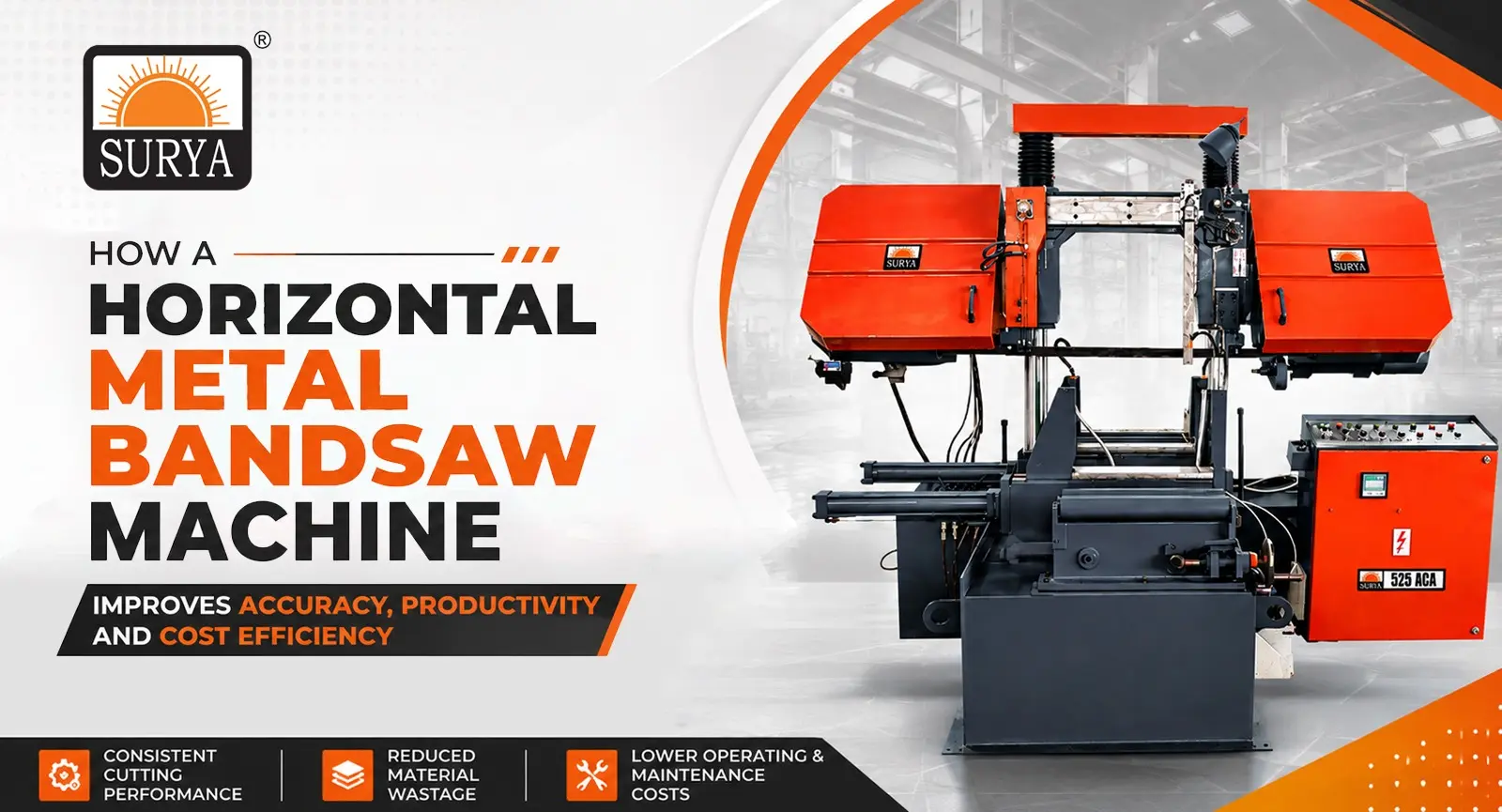
Quick Summary: A horizontal metal band saw machine cuts straighter, wastes less material, and runs longer between blade changes than older cutting methods, which adds up to savings once you look past the purchase price. This article covers how these machines improve accuracy and throughput, where the cost savings genuinely come from, and what to check before choosing one for the shop floor.
Introduction
Cutting metal sounds like a simple task until you watch what happens when it’s done badly. A crooked cut means extra grinding before a weld can even start. A rough edge can stop the part from fitting properly. Multiply that across a hundred pieces a day, and a small cutting problem turns into a major reason why the production line needs to suffer. A horizontal metal band saw machine solves this problem very easily. Instead of relying on an operator’s steady hand or a disc that chews through material, it uses a long, continuous blade that lowers onto the workpiece and cuts through in one smooth pass. For shops cutting steel, pipe, tubing, or structural sections all day, that one change affects everything downstream: how much gets wasted, how much rework happens, and how many pieces actually get finished by the end of a shift.What Makes the Cut So Much Cleaner?
A horizontal metal band saw machine uses a continuous blade that lowers steadily onto the material, instead of the aggressive, single-strike action of a chop saw. That difference alone accounts for most of the accuracy gain. The reason why the cuts are cleaner is:- The blade stays under constant, controlled pressure, which keeps the cut straight from start to finish instead of drifting as the blade heats up or the operator adjusts pressure by feel.
- Kerf loss is minimal, meaning less material gets turned into scrap with every cut, a difference when you’re cutting hundreds of lengths a month.
- Clamping keeps the stock from shifting, so the angle you set is the angle you get, without the small variances handheld cutting introduces.
What Makes Horizontal Metal Band Saw Machine Different?
A horizontal band saw runs a continuous toothed blade around two wheels, cutting straight through the material while it is securely on the machine bed. The blade moves horizontally through the workpiece in a controlled, steady path. That setup gives you something useful: the material doesn’t need constant handling or adjustment mid-cut. Once it’s aligned and clamped in place, the machine just holds its line and keeps cutting. Compared to handheld tools or less controlled cutting methods, here’s what you actually get:- Cut lengths that come out consistent, run after run.
- Straighter cuts, without the drift you’d get from a hand-guided tool.
- Less vibration while it’s running, which helps both the cut quality and the blade’s lifespan.
- Fewer errors that come down to operator judgment, since the machine’s doing the guiding, not a steady hand.
- Solid performance whether you’re cutting one piece or running a full batch.
How It Supports Higher Production
A busy workshop rarely loses time in one big chunk. It’s smaller stuff that adds up: remeasuring a piece because the first number felt off, repositioning stock that shifted slightly, clearing chips before the next cut can even start, fixing a rough edge that shouldn’t have needed fixing in the first place. None of it looks like much in the moment, but stack it across a full shift, and this affects the quality of the work. A horizontal metal band saw machine cuts a lot of that friction out by turning the process into something an operator can just run through without thinking twice:- Load the material into position.
- Clamp it down with the vice.
- Dial in the cutting settings for that work.
- Start the cut and let it run.
- Pull the finished piece, load the next one, repeat.
The Productivity Gains Most Shops Notice
Speed gets mentioned a lot when people talk about band saws, but the productivity gain usually comes from somewhere else. Here are some of the productivity gains that one can get using this horizontal metal band saw machine:- Continuous blade operation cuts down on idle time between cuts, since there’s no need to reset or reposition the blade the way some other cutting methods require.
- Consistent, accurate cuts mean fewer parts need rework or scrap, which saves time that would otherwise go into fixing a bad cut rather than making the next one.
- Automatic feed control on many machines lets an operator run multiple cuts with less manual adjustment, freeing them up for other tasks around the shop.
- Longer blade life means fewer mid-shift blade changes, and every blade change is downtime that adds up across a full week of production.
Conclusion
Cutting metal shouldn’t be the part of the work that slows everything else down. A horizontal metal band saw machine takes care of that: straighter cuts, less waste, and blades that don’t need constant swapping, so your team can focus on the actual work instead of fixing avoidable mistakes. If you’re thinking about upgrading, Surya Machineries can guide you through which machine actually fits what you cut and how much of it.FAQs
It varies by material and cut complexity, but shops typically see a noticeable reduction in scrap once cuts consistently meet tolerance without requiring oversized stock as a buffer.
It handles both, though tube and thin-walled material need a finer tooth pitch than solid bar. Run the wrong pitch on tube, and you’ll get chatter or a torn edge instead of a clean cut.
Most models handle round bar, tubing, and structural shapes well, though vise design and clamping strength should be checked against the specific range of materials a shop actually plans to cut.
Regular inspection helps catch tension drift early, since inconsistent tension is one of the more common causes of inaccurate cuts over time.
Yes, particularly models with automatic feed control, which reduce manual adjustment and keep cutting consistent across long production runs.